

Why do cats knock things over? Do they do that on purpose?


You set your glass of water on the table. Your cat walks over, looks you dead in the eye, and pushes it off the edge. Then they walk away as if nothing happened. If you have ever lived with a cat, this scene probably sounds familiar. It is one of the most talked-about quirks in the cat world, and it has a very real explanation rooted in how cats are built.
Let's find out together in this blog, why do cats knock things over? Do they do that on purpose? and some tips to help you deal with this situation. There are biological and behavioral reasons behind every swipe, and once you understand them, the behavior starts to make a lot more sense.
Why does my cat keep knocking things over?
Cats are natural hunters. Even though your house cat has never had to catch its own food, its brain is still wired for the hunt. According to some experts, cats are hardwired to be attracted to things that move, because fast-moving objects are associated with prey.
Pushing something off a table and watching it fall triggers that same instinct. The object moves, makes a sound, and sometimes bounces around on the floor. From a cat's perspective, that is basically hunting practice.
There is also the curiosity factor. A cat behaviorist explains that cats explore the world largely through their paws. Tapping or pushing an object gives it information about its weight, texture, and how it reacts to pressure. A glass of water sitting on your desk is, to your cat, a mysterious object worth investigating. Knocking it over is part of that investigation.
Boredom is another common driver; cats without sufficient environmental enrichment, meaning no vertical spaces, no interactive toys, and limited activity, are much more likely to find their own entertainment. Knocking things over may simply be the most exciting thing happening in their day.
Do cats deliberately knock things over?
Yes, in many cases they do. Research and clinical observation both support the idea that this is intentional behavior in cats, not accidental clumsiness.
Data explain that cats are natural-born hunters and their prey instinct drives them to investigate and test objects. When your cat paws at something sitting on the edge of your desk, it is testing that object the same way it would test potential prey in the wild. The behavior is purposeful and deliberate, even if the outcome looks chaotic from your side.
That said, not every knocked item is a calculated decision. Some cats, especially those that do not have enough vertical space to navigate safely, simply bump into things as they move along shelves and counters.
In those cases, the knocking is more about your cat using surfaces as pathways than a deliberate act. But when a cat sits down, pauses, makes eye contact with you, and then slowly swipes something off the table? That is very much on purpose.
Do cats knock things over for attention?
This is one of the most common reasons, and it tends to develop over time. Cats learn from experience. If your cat knocks something over and you respond, whether that is with a firm "no," by rushing to pick the item up, or by giving them a treat to distract them, your cat has learned that this behavior gets a reaction.
Cats do not distinguish between positive and negative attention the way we might expect. From their perspective, a reaction is a reaction. If knocking your pen off the desk reliably brings you over to them, they will keep doing it.
Some experts explain that cats are easily bored, and knocking things over becomes a type of play-based behavior. For a cat that is not getting enough daily interaction, knocking something over is a fast and reliable way to make something happen in an otherwise uneventful afternoon.
Also, highly social breeds, such as the Sphynx or Abyssinian, are particularly prone to this kind of attention-seeking behavior. They are more people-oriented than most breeds and need more direct interaction throughout the day.
The fix is not to ignore your cat altogether, but to redirect how they seek your attention. Scheduled play sessions each day, especially ones involving wand toys or anything that mimics prey movement, give your cat a healthy outlet for the same energy that ends up pushing your coffee mug off the counter.
How to teach a cat to stop knocking things over?
You are unlikely to eliminate this behavior entirely, and that is okay. Cats are wired to do this, so the goal is redirection, not suppression. Here is what actually works, according to veterinary sources.
The most important step is not to react when it happens. Do not respond, do not scold, do not even look at your cat when they knock something over. If the item is dangerous and needs to be picked up immediately, do so calmly with your back turned to your cat. Any visible reaction, including negative ones, is reinforcing the behavior.
Experts recommend giving your cat daily play sessions with toys that offer similar tactile feedback to batting objects around, such as wand toys, ball-and-track toys, or puzzle feeders. Puzzle feeders are particularly useful because they combine the satisfaction of hunting with the reward of food, which satisfies several instincts at once.
Cat-proofing your home also helps. Keep fragile or valuable items in cabinets or in areas your cat cannot access. Remove the opportunity, and the behavior has nowhere to go.
Finally, environmental enrichment makes a significant difference. A cat that has a cat tree, window access, rotating toys, and regular interaction with its owner is simply less motivated to create its own entertainment.
Try creating an environment that satisfies your cat's wild side, including vertical spaces, hiding spots, and regular scheduled interaction.
What is a red flag behavior in cats?
Not all unusual cat behavior is harmless. While knocking things over is almost always normal, there are behavioral changes that deserve closer attention because they can signal something medical rather than just quirky.
Behavioral changes in cats are often the first visible sign of a progressing illness. Cats are skilled at hiding pain and discomfort for a long time before their behavior noticeably changes. By the time you notice something is different, the underlying issue may already be quite advanced.
The following behavioral changes are considered red flags by veterinary professionals:
- Sudden withdrawal or hiding: A cat that retreats from people and becomes difficult to find is often masking pain or distress.
- Changes in eating or drinking: Refusing food for more than 24 hours is always cause for concern. Increased thirst can be an early sign of conditions such as diabetes, kidney disease, or hyperthyroidism, according to 7 Hills Veterinary Clinic.
- Litter box avoidance or straining: This can signal a urinary blockage, which can become life-threatening very quickly in cats, particularly in males.
- Sudden aggression or unusual vocalization: Sudden behavioral changes, including increased aggression or more frequent meowing, can be a red flag for conditions ranging from pain to chronic kidney disease, hyperthyroidism, and urinary disorders.
- Changes in grooming: Both undergrooming and overgrooming are warning signs. A cat that stops grooming may be in pain. One that grooms obsessively to the point of bald patches could be dealing with stress, parasites, or allergies.
- Lethargy or loss of interest in play: Veterinary Hospitals point out that a cat that used to be playful and suddenly loses interest in activity could be dealing with internal illness, pain, or even cognitive dysfunction in older cats.
The key thing to remember is that you know your cat. If something feels off, it probably is. Trust your instincts.
Do I need to call a vet?
Knocking things over on its own is not a reason to call your vet. It is a normal feline behavior with a well-documented explanation. However, if the knocking becomes compulsive or if it is happening alongside other changes you have noticed, that combination is worth a conversation with your veterinarian.
Make an appointment if any new behavior persists for more than 24 hours, because cats mask illness so effectively that visible behavioral changes often mean a problem has been developing for some time. The sooner it is caught, the more options your vet has.
You should call your vet without delay if your cat is straining in the litter box, not eating for more than a day, showing sudden aggression when previously calm, hiding persistently, losing weight noticeably, or drinking significantly more water than usual. These are signs of something medical, not behavioral.
For general behavioral questions, your vet is also a good first call. Many behavioral issues in cats have straightforward solutions once the underlying cause is identified, and your vet can refer you to a certified feline behavior specialist if needed.
At the end, we need to remember that cats are complicated, funny, and endlessly fascinating creatures. Their quirks, including this one, are part of what makes them so easy to love.
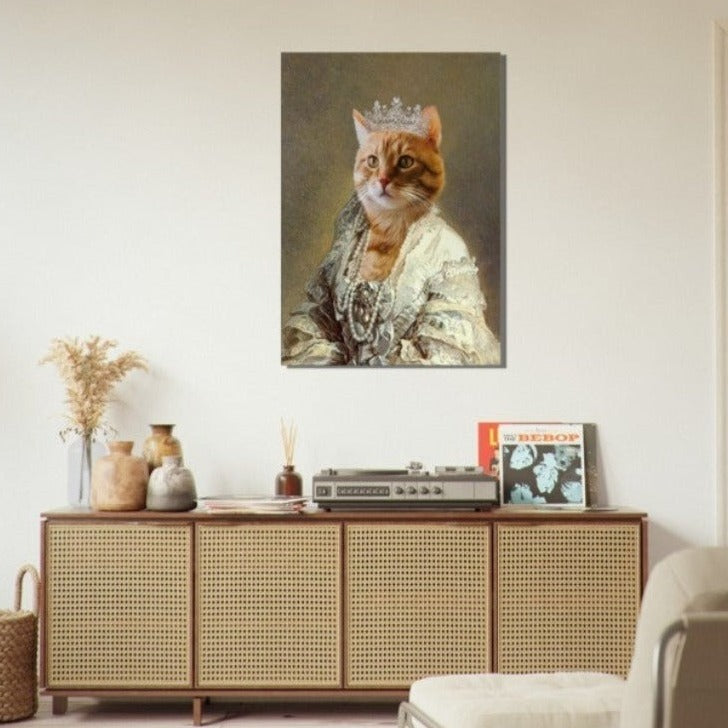
If you want to hold onto what makes your cat uniquely theirs, Portrait My Pet creates custom pet portraits from your photos, turning your cat's personality into a piece of artwork you can keep. It is one of those things that makes a lot of sense once your cat has knocked your favorite vase off the shelf for the third time.








0 コメント