

Realistic pet drawing from photo: Capturing your pet soul in the best way


Most people who commission a pet portrait want the same thing at its core: they want it to look like their animal. Their actual dog. Their actual cat. The exact way the light catches their eyes, the specific texture of their fur, the particular tilt of their head that you'd recognize anywhere.
That's what a realistic pet drawing from photo sets out to achieve. And when it's done well, it's the kind of artwork that makes people stop mid-sentence when they see it on a wall.
Getting there requires more than just a good artist and a decent photo. It requires understanding a lot of things.
This guide covers all of it: what realistic pet art involves, how the process works, what separates a truly lifelike drawing from a competent but generic one, and how Portrait My Pet approaches the challenge of capturing your pet accurately from a single photograph. So keep reading to know more.
What "Realistic" actually means in pet portrait art
The word "realistic" gets used loosely in the custom pet portrait space, so it's worth being clear about what it means before you make any decisions.
A realistic pet drawing is one in which the finished artwork bears a strong, accurate likeness to the specific animal in the reference photo. The proportions are correct. The eye color is right. The coat texture, whether it's the dense, wavy fur of a Golden Retriever or the short, sleek coat of a Greyhound, is rendered with enough detail that you can read the animal clearly. Distinctive markings, the shape of the ears, and the particular way a dog holds its mouth. All of these are preserved rather than generalized.
This is different from a stylized portrait, which might use the photo as a loose reference but applies an artistic interpretation on top. Both have their place. But if what you want is a drawing that looks like your pet rather than a drawing that looks like a portrait of a pet, realism is the standard you're aiming for.
It's also worth noting the difference between a realistic drawing and a photographic reproduction. A skilled, realistic pet portrait isn't trying to copy the photo exactly, it's interpreting it. The artist makes choices about light, composition, and detail that elevate the image beyond what the camera captured. That's why a well-executed realistic drawing can feel more like your pet than the photo it was made from.
What are the best styles for a realistic pet drawing from photo?
Not every portrait style is designed to produce a lifelike likeness. Some are deliberately stylized, exaggerated, or thematic. If realism is your goal, the style you choose matters enormously.
1- Detailed pencil and charcoal drawings
Pencil and charcoal are among the oldest and most respected mediums for realistic portraiture, and for good reason. A skilled artist working in graphite or charcoal can render fur texture, depth of field, and the subtle gradations of tone in an animal's face with extraordinary precision. The monochrome palette, far from being a limitation, often forces a level of attention to form and structure that color portraits can mask.
For animals with complex coat patterns, Huskies, Border Collies, Bengals, Tabbies, a detailed pencil drawing captures the layering and direction of fur in a way that is very difficult to replicate in looser mediums. These portraits tend to age well, too. The restraint of the format means they rarely feel dated.
2- Realistic digital painting
Digital painting, when done by a skilled human artist rather than an automated tool, can produce some of the most technically accomplished realistic pet portraits available. The medium gives the artist precise control over detail, color accuracy, and texture rendering, and the ability to work in layers means they can build up the depth and complexity of a coat gradually rather than committing to a single approach.
The keyword here is human. The difference between a realistic digital portrait created by an experienced artist and one produced by an AI tool is significant and immediately visible. An AI-generated image produces an approximation of an animal. A human digital artist produces a portrait of your specific animal, one that reflects the decisions and adjustments that only come from a person who has studied your photo carefully.
3- Oil painting style
Oil painting-style portraits sit at the intersection of realism and warmth. The richness of the palette and the depth of tone achievable in this style produce portraits that feel both accurate and alive. The texture and layering that characterize the oil painting look give the finished piece a quality that is hard to achieve in any other format.
This is the style most associated with traditional commissioned portraiture, the kind you'd find in a stately home or a gallery. Applied to a pet portrait, it carries that same weight and sense of permanence, while the subject matter gives it an immediately personal quality. Portrait My Pet's artwork portrait collection includes styles in this range, and they tend to work particularly well for dogs and horses with strong, defined features.
4- Watercolor with detailed line work
Pure watercolor leans towards the impressionistic end of the spectrum, but watercolor combined with detailed line work underneath can produce a result that is both visually soft and technically accurate. The line drawing provides the structural precision, correct proportions, accurate features, and defined markings, while the color wash brings warmth and life to the finished piece.
This is a style that suits cats particularly well, and lighter-coated dogs, where the subtleties of fur color and shading are important to the likeness. It's also a format that lends itself naturally to the bedroom and lighter living spaces, where a full oil-style painting might feel too heavy.
Realistic pet drawing from photo: How to provide the best possible photo
Even the most skilled portrait artist can only work with what they're given. A great photo doesn't guarantee a great portrait, but a poor photo makes a great portrait almost impossible. Here's what a good reference photo for a realistic pet drawing needs to deliver.
Sharp focus on the face
The face is the heart of a realistic portrait, and if the reference photo is blurry, out of focus, or taken at a distance where the facial features are small and indistinct, the artist cannot render them accurately. Take your photo from close enough that your pet's face fills a good portion of the frame. If you have a dog who won't stay still, take the photo immediately after a walk when they're tired and more settled.
Good, natural lighting
Natural light, outdoor light, or indoor window light, produces the most accurate colors and the most readable textures. Artificial light, particularly camera flash, creates flat, overexposed patches that wash out the subtleties of coat color and texture. Early morning and late afternoon outdoor light tends to be the most flattering for animals, avoiding the harsh midday shadows that can make facial features harder to read.
A clear view of both eyes
For the reasons described in the previous section, the eyes are critical. A photo where both eyes are visible, in focus, and lit naturally is the gold standard. A three-quarter angle, where your pet is facing slightly to one side rather than directly at the camera, often produces the most expressive result, as it shows depth and dimension in the face rather than a flat frontal view.
More than one photo, if possible
Portrait My Pet's team can work from a single photo, but if you have several, taken from different angles, in different lights, showing different expressions, providing more than one gives the artist more reference points to work from. A close-up of the face paired with a wider shot that shows the body and coat clearly can make a significant difference to the accuracy of the finished piece.
Don't worry about the background
Portrait My Pet removes the background as part of their process, so the setting of your reference photo is irrelevant. A cluttered living room or a busy garden is perfectly fine. Put all your attention on your pet and the light on their face, and let the team handle everything else.
Realistic vs. Stylized: Which is right for you?
There's no objective answer to this question; it depends entirely on what you want from the finished piece and where it's going to live.
A realistic portrait is the right choice if accuracy and likeness are your primary goals. If you want to look at the portrait and see your pet, specifically, unmistakably your pet, then realism is the standard to aim for. This is also the right approach for memorial portraits, where the emotional purpose of the piece is to preserve the memory of an animal as they actually were.
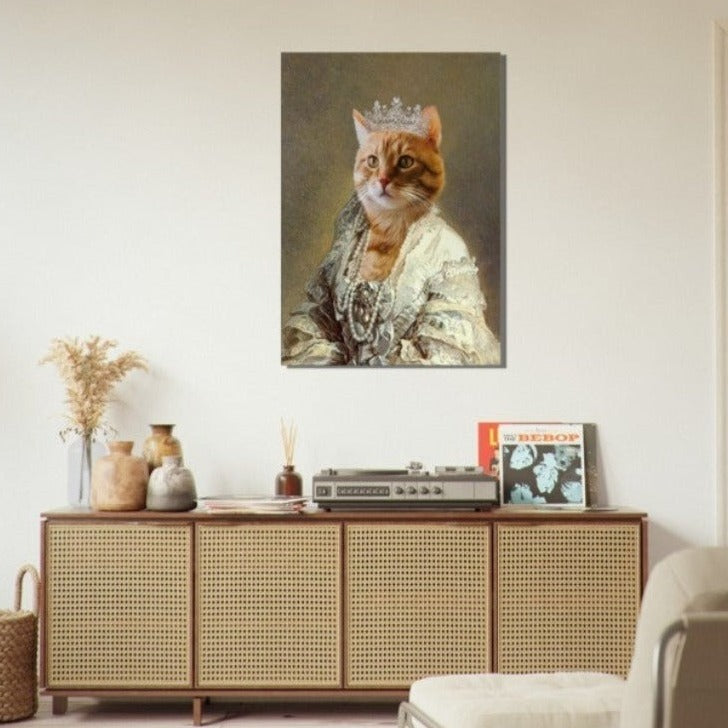
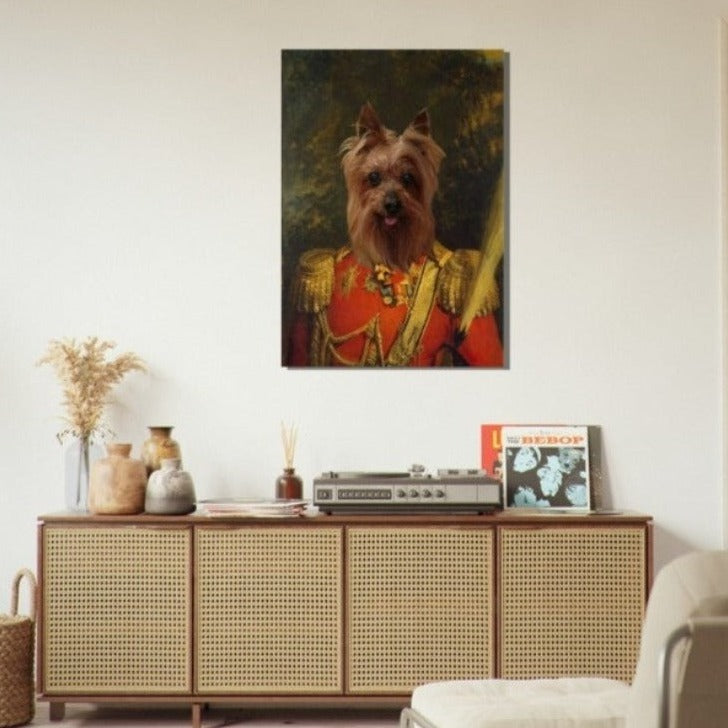
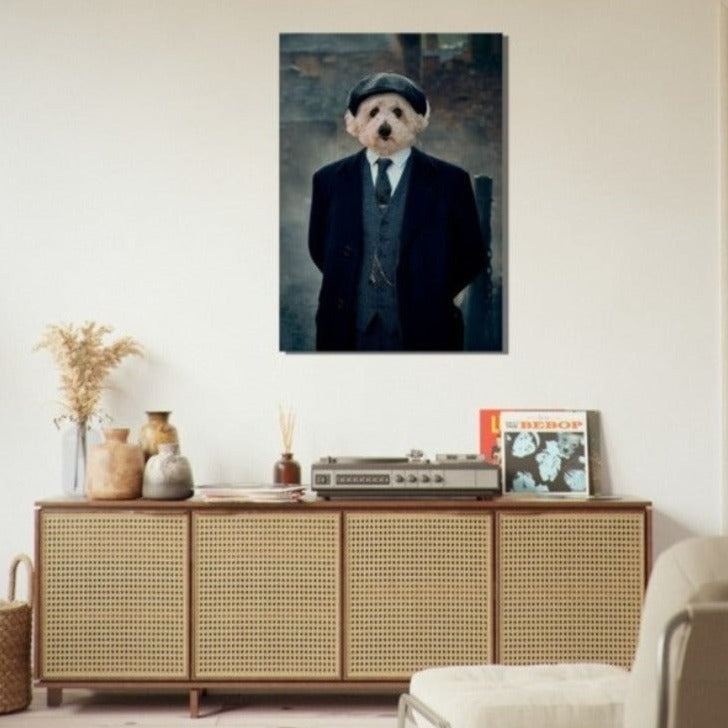
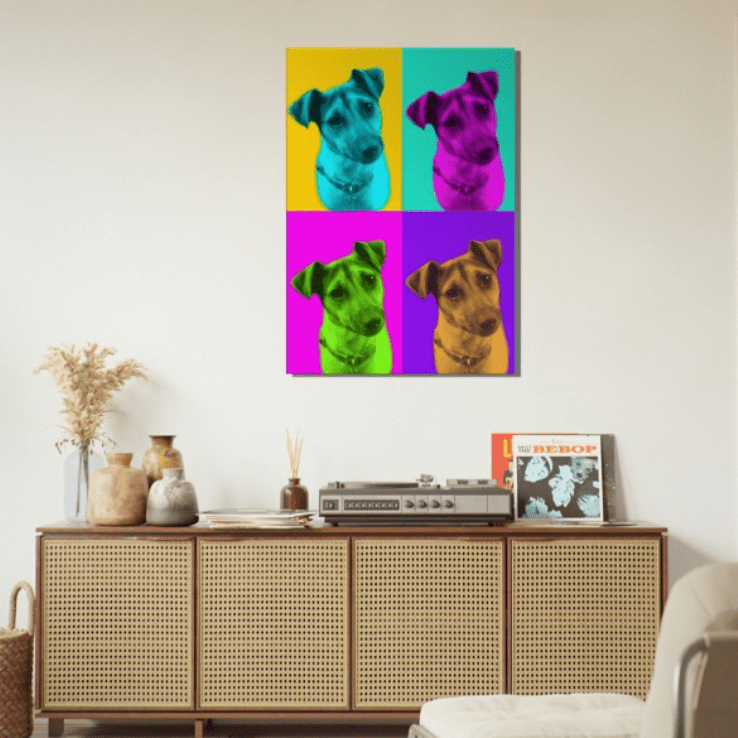
A stylized portrait, royal, funny, cartoon, military, or illustrated, is the right choice if you want something with a strong personality and visual presence, or if you want the portrait to serve a particular purpose in the room where it will be displayed. Stylised portraits are often better conversation pieces. They have a sense of play that pure realism doesn't always deliver.
The good news is that many of Portrait My Pet's styles manage to be both. A royal portrait that places your dog in period attire still requires the artist to capture your pet's actual face and features accurately within that context. The realism and the style aren't mutually exclusive, and the best portraits in the themed categories are the ones where the likeness is precise enough that you'd recognize the animal even dressed as a Victorian general.

How does Portrait My Pet handle realistic pet drawings?
Portrait My Pet's process is built around a proofing system that is particularly important when realism is the goal.
After you upload your photo and choose your style, the artists create a digital proof of your portrait and send it to you, usually within one day of placing your order. This proof is not a finished product; it's an opportunity to check the likeness before anything is committed to print. If the eyes need adjusting, if a marking isn't quite right, if the coat color reads differently from how you see it in real life, this is the stage where you raise it.
Portrait My Pet offers unlimited revisions at no extra cost, which matters a great deal when realism is your standard. A single revision cycle is rarely enough to get every detail exactly right. The ability to go back and forth until the portrait genuinely looks like your pet, without incurring additional charges, is one of the most practically important things a pet portrait service can offer.
Before work even begins, the team checks your submitted photo. If the resolution, lighting, or angle isn't going to produce a good result, they'll contact you by email and ask for an alternative. This upfront quality check saves a great deal of time and disappointment at the end of the process.
Once you're satisfied with the proof and give your approval, the portrait is professionally printed and shipped to your door with all hanging materials included and free shipping. You have three days after approval to raise any final changes before the artwork goes to print.
Frequently Asked Questions
Does a realistic pet drawing capture every breed accurately?
Yes, provided the reference photo is clear and detailed. Portrait My Pet's artists work with dogs, cats, horses, birds, rabbits, and exotic pets of any breed or species. The accuracy of the likeness depends primarily on the quality of the photo rather than the type of animal. Breeds with complex markings, distinct coat textures, or unusual features, such as Bengals, Huskies, or Shar-Peis, are all achievable with a good reference image.
Can a realistic drawing be made from an old or low-resolution photo?
It depends on the condition of the photo. If an older photo is clear enough to show the animal's facial features and coat accurately, even at lower resolution, an experienced artist can often work with it successfully. Portrait My Pet reviews every submitted photo before work begins and will advise you honestly if the image isn't going to produce a good result. For older photos of pets that have passed, it's always worth sending what you have and asking the team to assess it.
What is the difference between a human-made realistic portrait and an AI-generated one?
An AI-generated pet portrait produces a generalized, algorithmically created image that resembles the animal in the photo but does not replicate it with precision. A human-made, realistic portrait is created by an artist who studies your specific photo, makes considered decisions about light, proportion, and texture, and adjusts their work in response to your feedback. The difference in the quality of the likeness, particularly in the eyes and coat detail, is significant and immediately visible in the finished piece.
How do I know the portrait will look like my specific pet and not just any pet of that breed?
This is exactly what the digital proofing process is designed to address. Before anything is printed, you receive a digital proof and can compare it directly to your reference photo. If any feature, the exact eye color, a particular marking, the shape of the ears, isn't accurate, you flag it, and the artist revises it. Nothing is finalized until you're satisfied that the portrait looks like your pet, not just a representative example of their breed.
Is a realistic portrait more expensive than a stylised one?
Not necessarily. At Portrait My Pet, the price structure is based on the style and format you choose rather than a premium charged specifically for realism. Many of the detailed, accurate portrait styles sit within the same pricing range as the themed and costume options. The revision process, which is unlimited and free of charge, applies across all styles, including the most detailed realistic formats.
Can I request specific details to be included or corrected in the drawing?
Yes. The revision process exists precisely for this purpose. If your dog has a distinctive scar, if your cat has an unusually patchy coat that needs to be represented accurately, or if there's a particular feature that makes your pet immediately recognizable and you want it preserved in the portrait, you raise it during the proof review stage and the artists will incorporate it. The more specific you are in your feedback, the more accurate the final result will be.
What happens if I only have one photo of my pet?
A single good photo is enough to create a strong, realistic portrait. Portrait My Pet's team works from single-image submissions regularly, including for memorial portraits,, where the customer may have limited photographs available. If only one photo exists, make sure it's the clearest, best-lit, most detailed one you have, and focus on one where your pet's face and eyes are clearly visible.
Ready to make a Realistic pet drawing from photo of your pet?
A realistic pet drawing from photo is one of the most personal and lasting things you can have made. It takes a photograph, something you already have, and turns it into a piece of artwork that captures your specific animal with a precision and warmth that no camera image can match on its own.
The process at Portrait My Pet is designed to make that happen with as little friction as possible. You choose the style, upload the photo, receive a proof within as little as one day, and revise until every detail is exactly right. Nothing is printed until you're satisfied, and free shipping means the finished piece arrives at your door without any additional cost to think about.
Whether you want a detailed, technically precise realistic drawing, a lifelike portrait set within a themed composition, or something in between, browsing the full collection is the place to start. Your pet has a face worth capturing properly. It's time to give it the portrait it deserves. Contact us now.






0 uwagi